
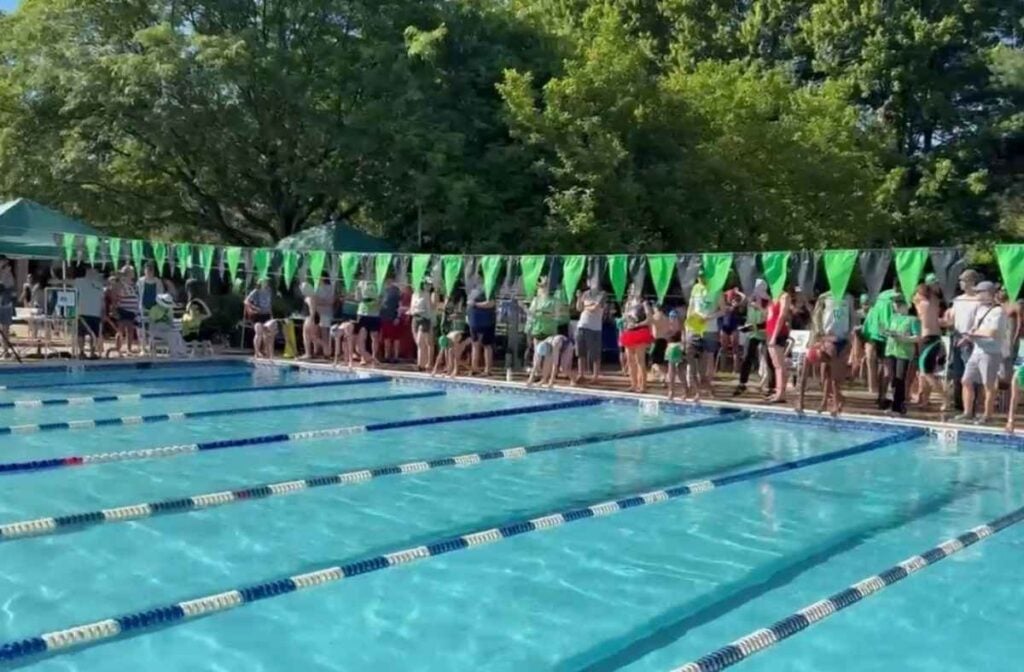
Written by a Columbia, Maryland teen swimmer with firsthand experience competing on a CNSL summer swim team.
If you’re thinking about joining a CNSL summer swim team, I’m sharing what it’s really like from a swimmer’s perspective—from practices and meets and what new swimmers should expect.
As a swimmer who recently joined CNSL (Columbia Neighborhood Swim League), I had no idea what I was getting myself into. Early morning swim meets?!! DQs? Why are people drawing all over themselves with Sharpie? Below are some tips, essentials, and clarifications for swim meets.
Essentials
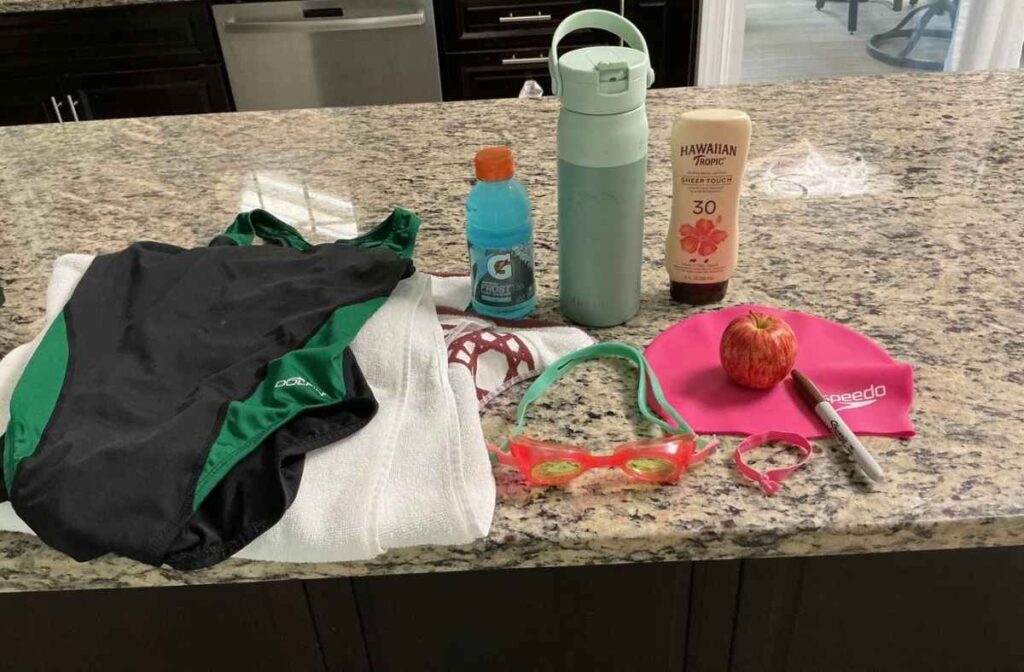
These are some basic essentials needed for swim meets.
- Goggles
- Water bottle
- Towel
- Hairband (for swimmers with long hair, tie the hair)
- Sunscreen (outdoor swim meets; SPF 30 or higher)
- Swim cap (reduce drag)
- Slightly tight-fitting swimsuit (I recommend Dolfin brand)
- Light snack (like fruit)
- Energy drink (it helps reduce leg cramps for me)
- A foldable chair(s), ideally with an umbrella or shade
You also will need a Sharpie. People write their event number, heat, lane, and stroke on their arm or hand. Here is an example of what you need to write.
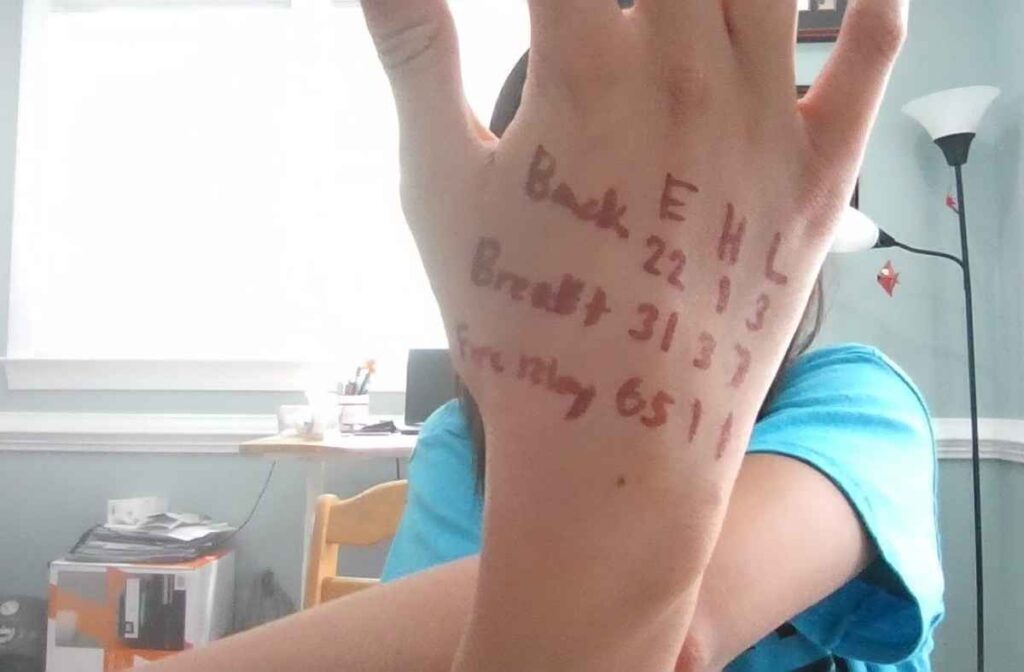
An event is a race, for example; Boys 11-12 50 meter freestyle.
A heat is whether you are going first, second, third, etc in a specific race. For instance, if you are heat 2, you are the second person to go during that race. That means you wait for the first person in your lane to swim before you swim.
The lane number is which lane you’re in. In my experience, there are chairs that say your lane number, and you sit in the chair corresponding to your lane number about 1-3 events before your race.
The swim meets can get really crowded, especially during larger swim meets like the all-city swim championship. There may not be chairs available, so you should bring at least one foldable chair for you and your swimmer to sit on.
What to Expect at a CNSL Swim Meet
Arrive Early and Be Prepared for a Long Meet
As I mentioned before, CNSL swim meets can get really crowded. Make sure to arrive a few minutes early to find parking. Most summer swim meets aren’t that far from your house, however school-year swim meets may require lots of driving. The swim meets are 4-6 hours long.
Be Ready for an Early Morning
Oh boy, these meets are early. Expect to wake up at around 5 am-7:15 am for swim meets. However, every swim team is different and you could be on a team that holds meets later in the afternoon or evening (lucky!).
Line Up Three Events Before Your Event
Please have your swimmer line up 3 events before their own. If your swimmer is in event 35, you should line up on event 32. My worst fear is that I miss my swim event (there is no redo). There will be an event display showing the current event.
How to Find Your Event, Heat, and Lane
What if you don’t know your swimmer’s event, heat, or lane? There will likely be a heat sheet at your swim meet (so many pages long) that says your swimmer’s event, heat, and lane. If not, you could always ask your kid’s coach and check your team’s website.
Understanding Pool Lengths
By the way, in a standard 25 meter pool, 25 meters is one length of the pool (swim to the other side of the pool). 50 meters is 2 lengths of the pool (swim to the other side of the pool and back).
Know the Swim Stroke Abbreviations
Also, Fly = Butterfly, Free = Freestyle, Back = Backstroke, and Breast = Breaststroke. Swimmers love to shorten stroke names!
What Happens Before the Meet Starts
This is what the swim meet will be like. Most swim teams have a warm-up that usually lasts about 20-30 minutes. Do NOT miss warmups. They really help get in some last minute practice. Then, some swim teams have cheers (one of my favorite parts) and the National Anthem. Then the swim meet begins!
Don’t Wait Until the Last Minute to Use the Bathroom
You definitely should go to the bathroom during the swim meet, well before your event. I’ve had moments where I need to go to the bathroom but it’s almost my turn to swim. Don’t go to the bathroom at the last minute!!!
Food and Snacks at Swim Meets
There will be food that you can buy during the swim meet, however you can bring a snack if you want.
Swim Meet Rules, DQs, and Relays
What Does DQ Mean in Swimming?
When I started the swim team, I didn’t know what a DQ was. Did it stand for Dairy Queen? Well, it actually meant something much worse than an ice cream cone-it was a disqualification.
This means that your swimmer will be disqualified from the race and their score won’t be counted in the final results (even if they had the fastest time or hit their personal best!)
How Do You Know If Your Swimmer Got a DQ?
How will you know your swimmer got a DQ? The official will raise up their hand and write up a DQ slip. However, they will not announce it during the race. The official or coach will also tell your swimmer about the disqualification after they get out of the pool. Even if your swimmer got a DQ, they still need to keep swimming and continue with the race – their time just won’t count.
How to Avoid Getting a DQ
Let me teach you how to not get a DQ, so your race will count!
Breaststroke DQs
In breaststroke, Arms must not go past the hipline and pull and kick must be coordinated. The feet must do a breaststroke kick, not a scissor or flutter kick.
Freestyle DQs
In freestyle, your head needs to break the surface after 15 meters and you need to touch the wall before doing a flip turn.
Butterfly DQs
In butterfly, the arms must recover ABOVE water, and the head must break the surface by 15 meters. The kick has to be a dolphin kick and not an alternating kick or different type of kick.
Backstroke DQs
In backstroke, you need to touch the wall on your back (know your stroke count-that is the number of arm pulls you do before touching the wall, after passing the second backstroke flag), and do a flip turn.
Other Common Swimming DQs
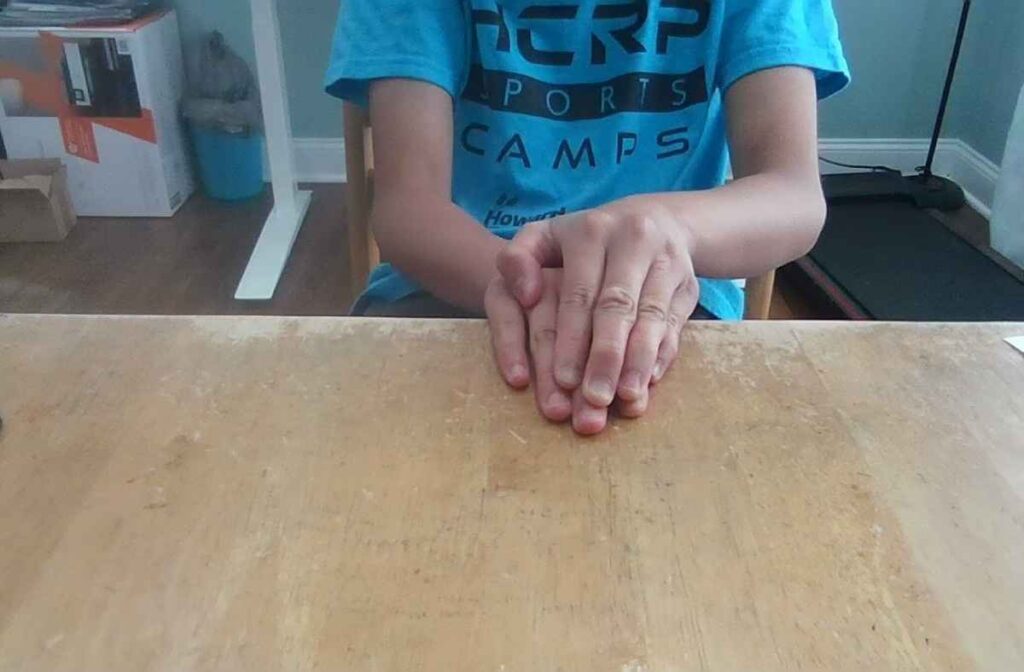
Some common DQs that apply are false start (applies to all strokes, starting too soon before the official blows the whistle). Additionally, you NEED to do TWO HAND TOUCH for breaststroke and butterfly during the turns and when you finish. The 2 hands must not be stacked, and must touch the wall at the exact same time.
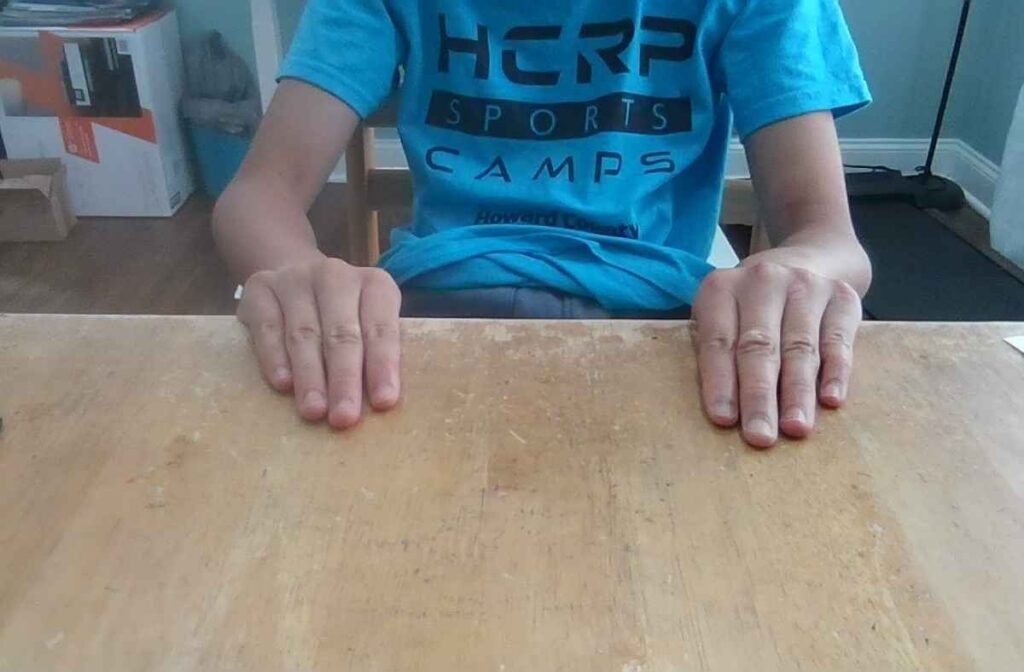
Top image is what you should do for touching the wall in breaststroke and butterfly, bottom image is what you shouldn’t do.
Understanding Swim Relays
You might be confused about the different types of relays. Ok, medley relay is a relay that consists of 4 people and is in alphabetical order of strokes (backstroke, breaststroke, butterfly, freestyle).
This is different from individual medley (IM), which is an individual race and is butterfly, backstroke, breaststroke, freestyle.
Free relays are relays (also 4 people) and the only stroke you do is freestyle.
How to Avoid a DQ in a Relay
In any swim relay, your feet CANNOT leave the starting block until after your teammate touches the wall. You can swing your arms before your teammate touches the wall, but your feet must remain on the starting block.
Both the IM and the medley relay must be swum in order too, to avoid getting a DQ.
CNSL Summer Swim Teams in Columbia, Maryland
Summer Swim Leagues in Maryland
Maryland has many summer swim leagues, including CNSL, CMSL, PMSL, SJSSL, FSSL etc. All of these swim leagues consist of around 14 individual swim teams. It is located in many different cities in Maryland, for example CNSL is primarily located in Columbia, Maryland and FSSL is primarily located in Frederick, Maryland.
I will be focusing on CNSL because there are too many swim leagues to focus on, but you can check your league’s swim website for more details.
Who Can Join a CNSL Swim Team?
CNSL has 14 swim teams, for example the Oakland Mills Tiger Sharks and Thunder Hill Lightning. In this swim league, you need to be 18 years old or younger as of June 1st. Swimmers living on Columbia Association (CA) assessed property must swim for their neighborhood swim team, and swimmers who don’t live in CA-assessed property must swim for the team which their elementary school is assigned to.
If you live outside Howard County, you must swim for one of the following 4 teams (Thunder Hill Lightning, Wilde Lake Watercats, Owen Brown Barracudas and Oakland Mills Tiger Sharks).
Do You Need to Be a Pool Member to Join CNSL?
You don’t need to be a member of the pools to join, because by joining the swim team you get automatic access to the pools where we hold practices and meets. However, you ONLY get access to those specific pools during meets and practices, not anytime.
Can Beginners Join CNSL?
A beginner can join CNSL, however they need to meet the tryout requirements. Swimmers aged 10 and under must be able to swim one length of the pool (25 meters) and swimmers 11-18 must be able to swim two lengths of the pool (50 meters). They cannot use the bottom of the pool, wall, people or lane lines for assistance. They don’t have to swim a legal stroke for tryouts, but for time trials (a pre-swim meet to record official times) and swim meets they must be able to swim breaststroke, backstroke, freestyle, or butterfly.
When Is the CNSL Swim Season?
There is a pre-season from May 26th – June 18th which is basically the start of swim season, and is evening practice only. You must be registered to practice starting June 1st, regardless if you are new to the team or not.
The regular season runs from June 19th – July 24th and has both a morning and evening practice. Practices are separated by age group. Pools vary based on the swim team.
How Much Does CNSL Cost?
The cost is $215 for CA (Columbia Association) members, $310 for Columbia Cardholders, and $525 for non-members. There are discounts for CA staff, income-qualified members, and Clippers swimmers.
CNSL ends in an all-city championship meet, where kids from all over the city compete! It is really fun but crowded and chaotic, so I recommend you find parking early. The all-city meet is separated by age group, which is 8 and under, 9-12, and 13+ year olds compete at different times of the day. Also, for some swim teams, they host combined swim practices on certain days where you get donuts!
Editor’s Note: CNSL dates, fees, eligibility requirements, and other rules may change from season to season. Check the official CNSL and Columbia Association websites for the most current information.