
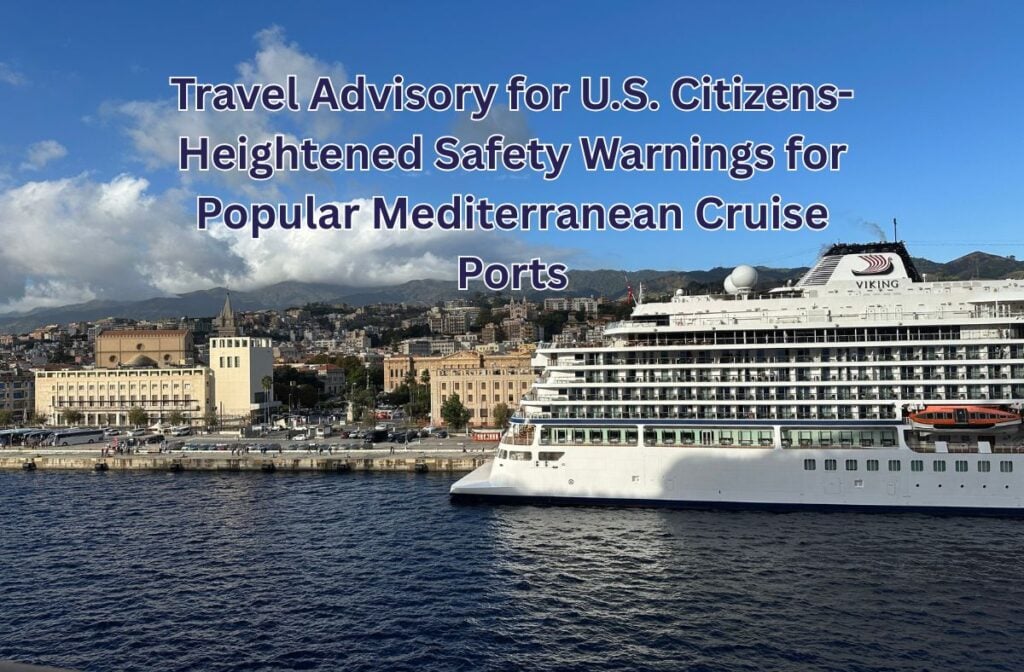
The United States Department of State is warning travelers to popular Mediterranean cruise ports — Italy and Turkey — to exercise increased caution due to the risk of terrorist violence, attacks with little to no warning, and arbitrary detention.
Both countries remain among the most visited destinations for Mediterranean cruises, drawing millions of travelers to historic cities, beaches, and cultural landmarks. However, the updated advisories highlight the importance of staying informed, alert, and prepared while abroad.
Suburbs 101 participates in affiliate programs including the Amazon Associates Program and may earn from qualifying purchases at no extra cost to you.

Italy: Exercise Increased Caution Due to Terrorism
The US Department of State has increased the travel advisory for Italy from Level 1 to Level 2- Exercise increased caution. Cruise travelers planning to visit Italy are advised to exercise increased caution due to the risk of terrorist violence, including the possibility of attacks with little or no warning.

According to the advisory, terrorists may target a wide range of public areas, including:
- Tourist spots
- Transportation centers
- Shopping malls and markets
- Local government buildings
- Hotels, clubs, and restaurants
- Religious sites
- Parks
- Sporting and cultural events
- Schools
- Airports
- Other public areas
Travelers should remain alert in tourist-heavy locations and monitor local media for breaking news that may affect their plans. Cruise passengers are encouraged to enroll in the Smart Traveler Enrollment Program (STEP) to receive alerts from the U.S. Embassy and make it easier for officials to contact them in an emergency.
Before traveling, visitors should review the Country Security Report for Italy, prepare a contingency plan, and consult the International Travel Checklist. The advisory also recommends purchasing travel insurance that includes evacuation, medical, and trip-cancellation coverage.
For those docking in ports like Rome (Civitavecchia), Naples, Venice, Genoa, or Florence (via Livorno), these precautions can help ensure a smooth and safe experience while exploring Italy’s popular tourist destinations.

Safety Tips for Visiting Italy
If you plan to visit Italy — whether by cruise or independently — here are key safety steps to follow:
Stay alert in tourist areas such as major landmarks, plazas, and transportation hubs.
Beware of pickpockets, use anti-theft crossbody bags and belts with secret compartments for money.
Avoid leaving belongings unattended and keep valuables close to prevent theft in crowded areas.
Monitor local media and follow instructions from local authorities if an incident occurs.
Be aware of your surroundings in busy places like train stations, markets, and festivals.
Know emergency contacts, make sure you have the local port agent’s contact information, which is usually found in the cruise daily planner or the cruise port map. You should also know the local police number (112) and the nearest U.S. Embassy or Consulate.
Keep your passport secure with an RFID blocking cover and carry a photocopy or digital backup separately.
Enroll in the Smart Traveler Enrollment Program (STEP) to receive embassy alerts and security updates.
Have a contingency plan for emergency situations, such as knowing your cruise ship’s port agent or the location of your hotel’s safe zone.
Purchase comprehensive travel insurance– travel insurance that covers medical, evacuation, and trip interruptions.

Turkey: Increased Caution, With Specific No-Travel Zones
The US Department of State has increased the travel advisory for Turkey from Level 1 to Level 2- Exercise increased caution. Travelers to Turkey are advised to exercise increased caution (Level 2) due to terrorism and arbitrary detentions, with certain regions listed as Level 4 – Do Not Travel zones.
Do Not Travel To:
- Sirnak Province
- Hakkari Province
- Any area within six miles (10 kilometers) of the Syrian border
These areas face a continued threat of terrorist attacks, armed conflict, and civil unrest, including suicide bombings, car bombs, ambushes, shootings, and illegal roadblocks. U.S. government personnel are restricted from traveling in these regions.
Across the country, terrorist groups continue plotting possible attacks, which could occur with little or no warning in places such as tourist locations, transportation hubs, markets, malls, government buildings, hotels, clubs, restaurants, religious sites, parks, airports, and major events.
The advisory also warns of arbitrary detentions — including cases involving U.S. citizens — and exit bans that prevent travelers from leaving the country. Unauthorized protests and social media criticism of the government may also lead to arrest.
Safety Tips for Visitors to Turkey
If you plan to visit Turkey, officials recommend that you:
Stay alert in areas popular with tourists.
Beware of pickpockets, use anti-theft crossbody bags and belts with secret compartments for money.
Avoid demonstrations and crowds.
Purchase comprehensive travel insurance– travel insurance that covers medical, evacuation, and trip interruptions.
Monitor local media and adjust plans quickly if conditions change.
Keep your passport secure with an RFID blocking cover and carry a photocopy or digital backup separately.
Enroll in the Smart Traveler Enrollment Program (STEP) for embassy alerts and assistance.
Prepare a contingency plan
What This Means for Cruise Travelers
Italy and Turkey are popular port stops on Mediterranean cruise routes. While cruise operations continue as normal, travelers are urged to remain situationally aware, follow official guidance, and keep emergency contacts readily available.
In Italy, major cruise ports include:
- Civitavecchia (Port of Rome) — the primary gateway to Rome’s landmarks and Vatican City.
- Naples (Port of Napoli) — offering access to Pompeii, Capri, and the Amalfi Coast.
- Venice (Port of Venice / Marghera) — a UNESCO-listed destination with strict visitor management policies.
- Livorno (Port for Florence and Pisa) — connecting to Tuscany’s most famous cities.
- Genoa (Port of Genova) — a northern hub and embarkation point for Western Mediterranean itineraries.
In Turkey, leading cruise ports include:
- Istanbul (Galataport) — a modern cruise terminal located in the heart of the city’s European side.
- Kuşadası (Port of Kusadasi) — the primary gateway to the ancient city of Ephesus, one of Turkey’s most visited archaeological sites.
- Izmir (Port of Izmir) — a vibrant coastal city offering access to historical and cultural excursions.
- Antalya (Port of Antalya) — known for its old town, beaches, and nearby ancient ruins.
Cruise passengers should stay flexible, monitor local news, and check in with their cruise line regarding any itinerary changes linked to regional developments. When going ashore, it’s best to stay with organized excursions or trusted local guides, keep belongings secure, and be aware of your surroundings in crowded tourist areas.
The updated advisories for Italy and Turkey emphasize awareness and preparation, not avoidance. Both nations continue to welcome visitors and offer unforgettable cultural, historical, and coastal experiences.
By staying alert, following official guidance, and purchasing comprehensive travel insurance, cruise travelers can continue to enjoy the best of the Mediterranean — safely, smartly, and with confidence.